Physical Address
The Woodlands, TX, USA
Physical Address
The Woodlands, TX, USA

Translator’s Preface[1]
When I think about my vocation, I am not afraid of life.
ANTON CHEKHOV (1860-1904)
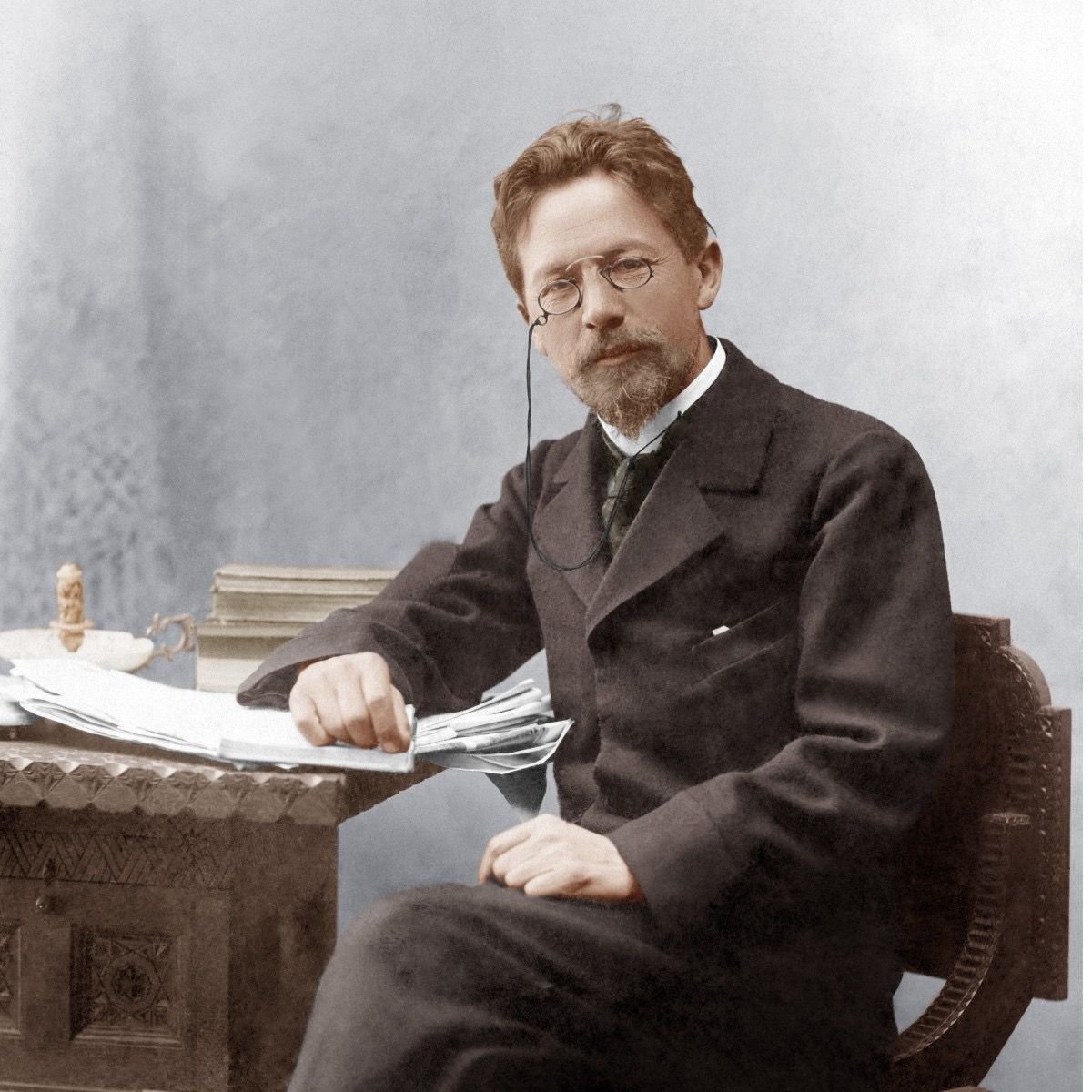
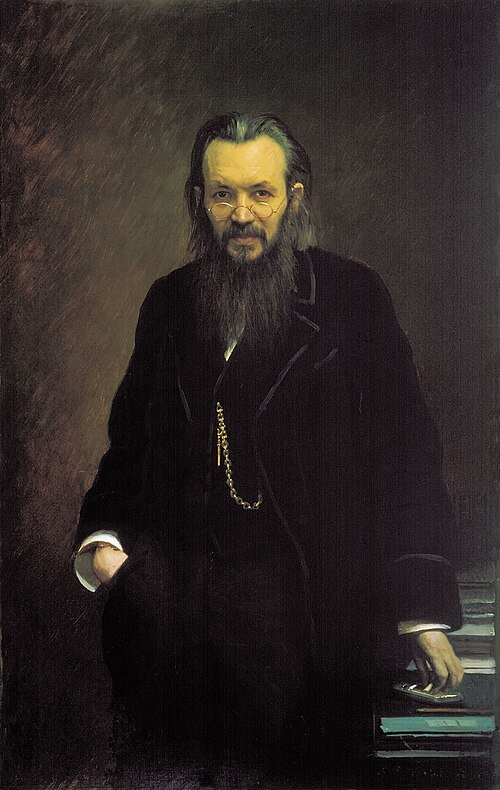
The Russian physician and playwright ANTON CHEKHOV once wrote to his friend ALEKSEY SUVORIN—who had advised him to dedicate himself to a single profession: “You advise me not to chase two hares, and not to think about medical work. I don’t know why one shouldn’t chase two hares, even in a literal sense […] I feel more secure and more satisfied with myself when I reflect that I have two professions and not one. Medicine is my lawful wife, and literature is my mistress.” Indeed, in that same letter dated September 11, 1888, he added: “If I did not have my medical work, I doubt I would have been able to devote my free time and my thoughts to literature.”[2]
As a translator and an astrologer, I deeply identify with the playwright’s experience. Were it not for a devotion to letters, I would not have docked at the port of astrology, nor arrived at this work. In much the same way that the Sun has its domicile in the sign of the inextinguishable flame and its ecstasy or joy in a house or region related to astrology, I too consider letters my domicile, and astrology my joy.
It is a distinct pleasure to have taken responsibility for the translation of what has proven to be a work not only noteworthy, but of profound reception within the astrological community, particularly the Anglophone one. It is precisely this widespread acclaim that justifies its translation into Spanish—and, indeed, into the rest of the Romance languages (Italian and French, amongst others)—for its content constitutes nothing less than the bedrock of Western astrology, the very foundations of the discipline. As the author of the foreword, astrologer and academic DEMETRA GEORGE, recipient of the 2002 UAC Regulus Award for Theory and Understanding in Astrology, rightly observes: “[…] This book presents a comprehensive overview of the original doctrines of Western horoscopic astrology and is a stunning and remarkable achievement for his first work.”
As a translator, I will not expound further upon the well-deserved recognition this work merits—lest I usurp the role of others—but will focus instead upon the remaining reasons for which it required translation, and addressing those specific aspects of the translation process that warrant mention for a proper understanding of the text.
The vast majority of Hellenistic astrological literature (even traditional literature in general), if not all of it, is available in Arabic, Greek, Latin, and English (a relatively classical, rather than modern, English), as these are direct translations from the original source texts. We herein refer to the translations by JAMES HOLDEN, ROBERT SCHMIDT, ROBERT ZOLLER, and BENJAMIN DYKES,[3] amongst many others.[4] BRENNAN’s work, for its part, salvages not only historical and hermeneutical aspects of vital importance that previous translators did not always address, but also the primary astrological concepts of the most representative Hellenistic authors, alongside the main prediction or forecasting methods (“timing techniques”) they employed. His work is, therefore, a species of ideal Hellenistic manual in modern English, now made available in a language that represents 17% of the global population (over 400,000,000 people), as Spanish constitutes the second most spoken native language in the world.
1. On the Nature of Specialised Translation
Turning now to the translatory work itself, let us note that, with a certain amount of frequency, translators encounter challenges of conversion. This occurs either because a term in the source language lacks a direct equivalent in the target language, or because—even if an equivalent exists—the specific meaning, connotation, or experiential reality the word is meant to evoke remains foreign to the speakers of the language into which the text is being rendered. In such instances, compound terms and the occasional footnote are vastly preferable to a forced, literal translation. The latter risks becoming a form of editing that betrays the integrity or style of the original text (though this is not to imply that all editing inherently constitutes an alteration).
Upon this very subject, BRENNAN argues in the introduction to his work (2017, p. xxxiii):
Another one of the challenges in reviving Hellenistic astrology in modern times is that there are many different technical terms in Greek and Latin that we don’t have equivalents for in modern astrology. This sometimes necessitates the introduction of new terms in English to use in contemporary discussions about those ancient techniques.
Likewise, there are no existing equivalents in the Spanish lexicon of modern astrology for several of the Hellenistic techniques that CHRIS, alongside with the aforementioned authors, have utilised or coined in English. For this reason, I have forged certain terms, deliberately avoiding the characteristic habit of respectable professionals who, in their eagerness to “make history,” establish or produce unnecessarily archaic vocabulary at the expense of naturalness and comprehensibility (or, at the very least, at the expense of the reader’s immediate intuition of what a term might mean upon first glance).
2. Terminological Challenges
The Hellenistic concepts whose translation presented a challenge or required deep linguistic reflection in order to evoke their essence and enable their use “in contemporary astrological discussions of ancient techniques” (as BRENNAN states) were:
These were rendered, respectively, as (literal meaning appears in brackets):
Concerning engagement [compromiso], certain authors have employed aplicación [application]. Whilst this is undeniably correct, it can be considered overly broad within the specific context of BRENNAN’s work. That is to say, as we consider the precision introduced by the author based upon a passage from ANTIOCHUS, the term refers to the application of one planet to another (a malefic), but strictly within a specific orb or margin—namely, no more than three degrees. This nuance explains the specificity of the original English term engagement, thereby conveying a sense of “commitment” or “hooking” [enganche]. It is, therefore, an application, but of a highly specialized nature.
As for the loosing of the bond [desprendimiento zodiacal] and Zodiacal releasing [relevo zodiacal], extensive commentary is unnecessary; the translations become entirely self-evident once one grasps the operational mechanics of both techniques.
Given the vast array of astrological terminology—that is, technical vocabulary—as well as the words chosen to define it, it would not be unusual for certain readers, particularly astrologers, to feel compelled to raise objections or offer reflections with respect to the translation of the numerous terms employed by BRENNAN. I have therefore decided to preempt commentary of this nature by providing the clarifications that follow. Whilst these points may seem self-evident to some, they might escape the consideration of others.
On occasion, it is solely the contexts in which words are deployed that reveal their true meaning, rather than relying exclusively upon their operational definitions found in available dictionaries. Consequently, we must speak of metalinguistic meanings. However, it is the task of the translator to distinguish the context in order to determine the precise sense of a term and, subsequently, the most appropriate equivalent. Yet, as translation is not an exact science, approximations become necessary (as is true of any discipline, astrology included, where the variables at play are numerous). When approximations are required, a descriptive translation is highly advisable—rather than leaving the precision of a definition to the reader’s imagination—without prejudice to providing a footnote containing the original expression or word so that the reader may reference the source text. Thus, I offer the necessary elements of judgment with respect to these translatory decisions.
When encountering a term whose conversion admits several synonyms, one must draw distinctions between semantic nuances, isolating the equivalent most closely aligned with the source word (in light, once again, of the context). This entails understanding, amongst other variables, that synonymy is not a relationship of absolute identity or equivalence, but merely of similarity—for only across two distinct languages can two words be truly identical (Bustamante, 2024, pp. 3-58, 153-158).[5] Therefore, synonyms must never be deployed interchangeably. It is precisely these subtle differences in meaning that we leverage to achieve absolute precision, ensuring our intent is understood without fear of misinterpretation. Consider the following examples.

a) “Divination”
Hence our decision to translate the English divination, for instance, as “divinación,” which remains entirely distinct from “adivinación.” The English “divination” constitutes “the practise of seeking knowledge of the future or the unknown by supernatural means” (Oxford English Dictionary), whereas the Spanish “adivinación” is defined as “predicting the future or discovering the hidden by means of omens or spells” (Real Academia Española). The latter is, therefore, an esoteric definition that stands leagues apart from the context of the present work. Herein, the author describes a divinatory system that is remarkably complex, organized, and coherent—neither arbitrary nor esoteric—anchored in natural observation (the heavens) rather than superstition.
b) “Place”
Consider also that we never fully realised that the English word “place” (in the context of traditional astrology corresponding to the Hellenistic period) should have been translated as “puesto” (chronological position or seating), never as “lugar” (location), once we understood sign-houses as the predominant chart model during that specific period of our history. The rationale for making this distinction should be obvious: Spanish possesses two distinct terms for the English place—“puesto” (a sequential position) and “lugar” (a physical location), whereas English relies upon a single word for the first two notions.[6] When reading in English, the precise meaning of that word in an astrological context must be distinguished, particularly when emphasizing that it is being counted in a specific (zodiacal) sequence from a specific point in the chart (the ascendant sign).[7] “The first/second/tenth place from left to right,” for instance, could answer someone asking for the location of their seat on an airplane or in a theatre; without mentioning that the Spanish word lugar (as physical location) could easily appear in the same sentence as the astrological Spanish term lugar (as house), lending itself to confusion or cacophony.
Consider the following:
This is neither clearer nor more convenient than:
In the latter case, there is no need to disambiguate between two different meanings, whereas in the former there would be. Other constructions make the translation of puesto (chronological position) even more advantageous due to a third form of use of the Spanish “lugar” (“in place of/instead of”). The phrase
would be far more appropriate than deploying the phrase
Finally, the Spanish “puesto” becomes the most natural as one considers the following example.

c) “Significator” vs. “ruler”
It is likewise worth clarifying the distinction between the English “significator” and the Spanish “significador.” The term represents, or can represent, two subtly different concepts depending upon whether the discipline is practised in the Hispanophone or Anglophone world. Whereas in the Spanish-speaking world (and indeed, across Romance languages in general) it will almost invariably refer to the planet that naturally rules the sign upon the cusp of a house, in the English-speaking world it will almost invariably refer to any celestial object that, according to the chart in question, bears a relationship to the matter under examination.
In English, when denoting the planet that rules a house according to the sign upon its cusp, the term “ruler” (“regente”) is utilised, and this is precisely the word CHRIS employs to refer to the “significadores” (i.e., rulers) of houses (see, for instance, Chapter Thirteen). In sum, the proper Spanish equivalent for the English ruler is significador, whilst the proper Spanish equivalent for the English significator is—or ought to be—indicador (indicative of/a sign of).
In this edition, however, we have preserved the original cognate (significador) because, in the vast majority of instances, it is abundantly clear that CHRIS is speaking in broader terms; that is, the examples make it evident that he is not referring to a house ruler (not to mention that the adjective “general” frequently precedes the English word significator). On the rare occasions where ambiguity might arise (typically when he quotes or expounds upon the instructions of ancient authors), the reader must remain mindful of the distinction outlined above.
Let the preceding examples serve to demonstrate that translation is by no means a strict linear process—particularly when the two languages the translator is navigating are fundamentally distinct in nature (i.e., regarding syntactic structures, morphemes, and so forth). Such is the case with English (Germanic language) and Spanish (Romance language), in stark contrast to two structurally compatible languages, such as a pair of Romance languages (e.g., translating from Spanish to Portuguese, or vice versa). Because translation is not an exact science, analysis, reflection, and critical thinking remain the foundational tools of the craft.
3. Cultural Bridge
It should perhaps also be clarified that my role has been solely and exclusively that of translator and editor of the translation, rather than critic or commentator.[8] Whilst it is true that the reader will encounter commentary unrelated to translation or general linguistic matters, these notes were designed to elucidate the relevance of certain authors mentioned by BRENNAN (figures potentially unfamiliar to the Hispanic astrological community) and to render certain concepts more accessible for students of the Hellenistic astrological tradition (for, as noted earlier, the vast majority of Hellenistic literature remains available almost exclusively in English). These annotations, therefore, serve to (i) familiarise the reader with the Anglophone academic landscape, and (ii) preempt potentially unfounded interpretations of Hellenistic concepts. Although we have thus assumed a somewhat pedagogical function, this intervention has been kept strictly minimal.

With respect to the bibliographic references that appear throughout the author’s numerous footnotes, it is customary that these remain untranslated; as a general rule, translators do not convert the titles of published works. Nevertheless, it remains undeniably true that in many instances—if not the vast majority—these titles are instrumental in helping the reader grasp exactly why the author is citing a given work. Furthermore, they frequently pique the reader’s curiosity, often prompting a new bibliographic acquisition. Consequently, whilst the original English titles are preserved alphabetically in the volume’s back matter (Bibliography), they have been rendered into Spanish within the footnotes (i.e., as encountered during the actual reading of the text).
* * *
I wish to express a very special gratitude to the individual who accompanied me in this undertaking with the exact same enthusiasm as the translator himself: the deeply bilingual astrologer, highly versed in the Hellenistic tradition, CAMILO NÚÑEZ (Colombia). To merely state that he was always available would scarcely do justice to his readiness, as his assistance was provided almost in real time. NÚÑEZ responded to my messages instantaneously, and we leveraged the specificity of these queries to exchange reflections upon the subject matter (and engage in a bit of debate). Once again, I reiterate my profound gratitude because, amongst other things, his support was entirely selfless.
I also extend my thanks to the author, CHRIS BRENNAN, for trusting in my talent and honouring me with this commission. As stated at the outset, I had the opportunity to revel in two distinct vocations simultaneously, and I hope to continue enjoying such opportunities (whether with his future works or those of others) for the benefit of the Hispanic astrological community.
DAVID BUSTAMANTE SEGOVIA
OCTOBER OF 2023
BOGOTÁ D.C.
___________________________
[1] © 2026 David E. Bustamante. All rights reserved. This text constitutes the direct English translation of the official Spanish Translator’s Preface. It corresponds to the manuscript delivered to the author in September 2024. Minor formatting adjustments and structural subtitles have been added by the translator to both the English and Spanish editions to facilitate reading and cross-comparison. This analysis reflects the translator’s technical methodology and linguistic choices. It is an independent scholarly work and does not necessarily represent the views of the author or any potential publisher.
[2] Chekhov, A. Letters of Anton Chekhov, trans. Garnett, C. (2004). Project Gutenberg. eBook: https://www.gutenberg.org/files/6408/6408-h/6408-h.htm
[3] Māshā’allāh ibn Atharī (8th century), Albumasar (9th century), and Sahl ibn Bishr (9th century), amongst others.
[4] The works of Franz Cumont, Franz Boll, A. E. Housman, Frank Egleston Robbins, Emilie Boer, Stefan Weinstock, Otto Neugebauer, G. P. Goold, David Pingree, and Wolfgang Hübner equally merit mention.
[5] For instance, illegal and unlawful do not mean the same; neither do effectiveness and efficiency, nor behaviour and conduct. However, conduct is indeed equivalent to “conducta,” behaviour to “comportamiento,” effectiveness to “efectividad,” unlawful to “ilegítimo,” and likewise, illegal to “ilegal.” See more examples, amongst other notions inherent in the translatory profession, in Bustamante, David (2024). Traducir no traduce trastocar. Desde la gramática y las connotaciones hasta la cultura y la traducción especializada [Translating Does Not Mean Transmuting: From Grammar and Connotations to Culture and Specialised Translation]. Editorial Universidad del Rosario (Bogotá D.C.).
[6] It could be argued that it might have been more convenient to translate the Greek term topoi into English as “dwelling” or “house,” rather than as “place,” provided it is clarified that the term possesses two acceptations depending upon whether one is discussing Hellenistic or modern astrology. In this sense, any reader would have invariably understood the subject matter, even if it were being addressed from two distinct perspectives (i.e., with or without the geometric partitioning of the local horizon).
[7] This refers to the term utilised to distinguish the sequential position occupied by a specific celestial body in the natal chart within the order of the signs, commencing from the ascending sign.
[8] Over the course of this project, I was contacted by several individuals inquiring whether I would be providing critical commentary upon the work in addition to the translation itself—an exercise I have indeed undertaken in other forums.