Physical Address
The Woodlands, TX, USA
Physical Address
The Woodlands, TX, USA
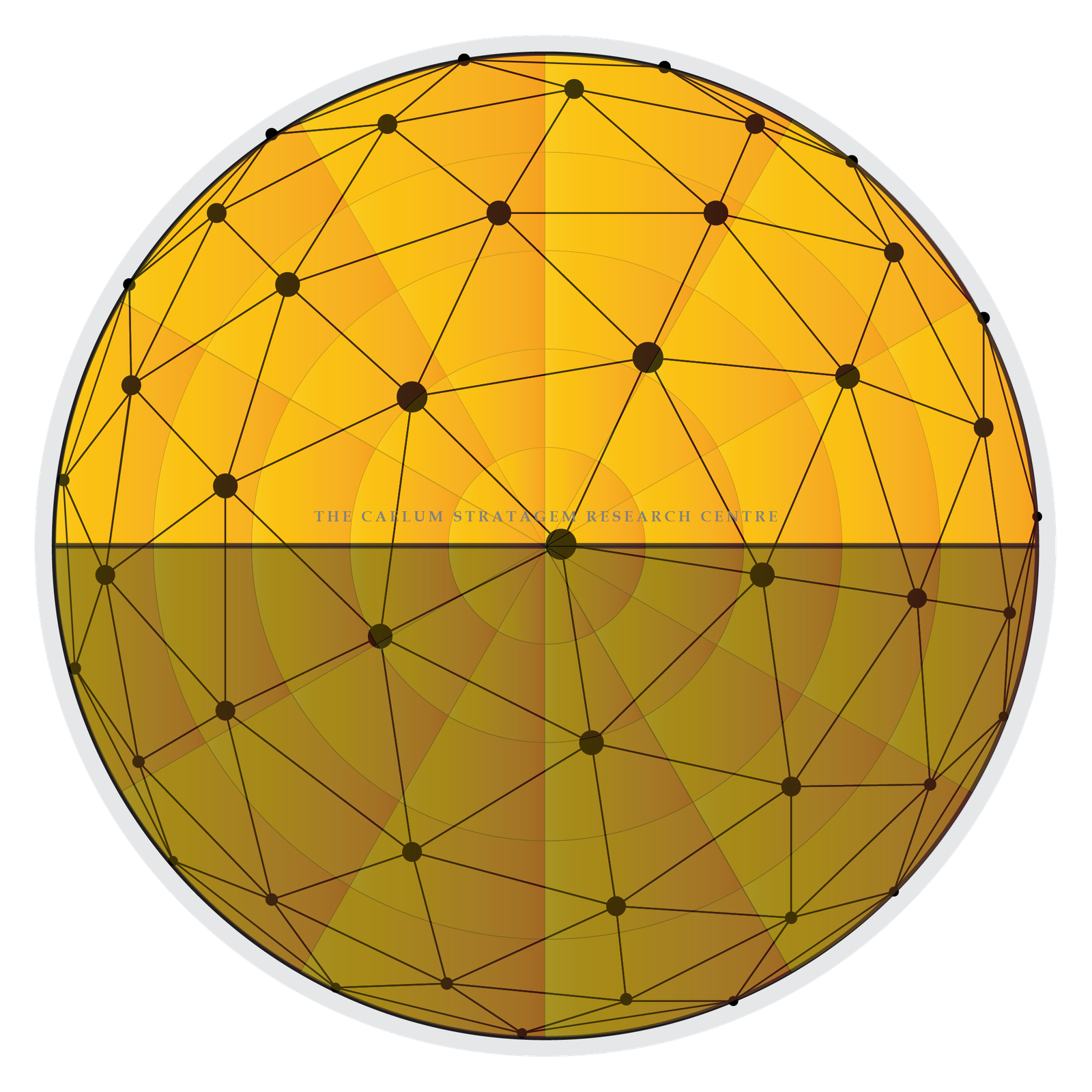
If a system of celestial partitioning (house division) has as its objective the faithful reflection of the specific position of an occupied or unoccupied ecliptic coordinate (e.g., λ 85° 52’, or Saturn at 25° 52’ Gemini) relative to the local horizon (ϕ), and if it is true that measurement precedes interpretation (one cannot interpret a position that does not exist), upon what spherical geometry or epistemological principle can disparate computational methods be declared “interchangeable”?
Can a celestial object simultaneously occupy two or more altitudes at a given amount of time after rising or setting relative to the same local horizon? At 02:34 p.m. in London, can 25° Gemini reside both above and below the horizon (e.g., +30° 00’ and −30° 00’), or simultaneously occupy the ascending eastern quadrant and the descending western quadrant—that is, appear on both sides of the local meridian (e.g., 175° 00’ and 185° 00’)?
If the laws of rotational mechanics could be suspended to permit such a physical impossibility, partitioning systems would indeed be interchangeable, and blind statistical data-dredging would be required in order to determine which abstraction is the “most reliable.”
However, because spherical trigonometry establishes that a coordinate can occupy only a single altitude and a single azimuth at any given instant, either all partitioning methods are astronomically false, or exactly one is astronomically true. In turn, if local positions are what is at issue, by what physical law can a calculation selectively prescind from obliquity—that is, recognize the obliquity of the ecliptic solely for certain coordinates (i.e., Asc, MC) while ignoring it for the remainder?
Statistical research (whether calibrated or uncalibrated), consequently, bears zero relation to where a celestial object physically resides in the local sky.
If only one coordinate system accurately traces the diurnal or nocturnal trajectory of occupied or unoccupied ecliptic coordinates, then statistical research can commence only after that geometric calibration has been established—never before. Long before an astronomical position can ever signify anything (whether under the Hellenistic, Arabic, or Renaissance tradition), it must first exist, and, in turn, reside at the exact altitude and azimuth the practitioner claims it occupies at a specified time and place. Otherwise, the practitioner is merely executing statistical regressions upon nonexistent entities (phantom objects).
The Horoscopist Alibi: “Symbolic Lenses,” Data-Dredging, and Curve-Fitting (the Wendel Polich Fallacy)
Confronted with the geometric impossibility outlined above, much of contemporary discourse takes refuge in epistemological absurdities—specifically, methodological relativism. Rather than acknowledging the exact point at which a computational system loses track of an ecliptic coordinate, the contemporary apologist attempts what the astrologers of Antiquity, the Middle Ages, and even the Renaissance would never have attempted: sheltering mutually exclusive calculations behind collegial euphemisms and the promise of future statistical validation—a defense that a classical astronomer, transported to 2026, would unmask as follows:
Horoscopist:
Every house system is simply a different symbolic lens on the local sky.
Classical Astronomer:
Do you mean a different topocentric coordinate?
Horoscopist:
I want this to be an open-minded, collegial discussion.
Classical Astronomer:
Employing vocabulary designed to disguise a reluctance to master positional astronomy is not maintaining an open mind. A celestial coordinate is a celestial coordinate. Either it resides where our calculations place it, or it does not. The symbol depends upon its location in the sky. One cannot begin to evaluate something whose definition remains indeterminate.
Horoscopist:
Sir/Madam, we are trying to respect the validity of different interpretive frameworks: Regiomontanus, Campanus, Koch, Alcabitius, Whole-Sign.
Classical Astronomer:
Interpretive frameworks? You are conflating coordinates (positional astronomy) with their interpretation (astrology). The exact science is not astrology, but positional astronomy, and astrology depends upon astronomy to exist as a discipline, not vice versa. Astrology, in turn, is an art, and interpretive frameworks vary according to tradition (Hellenistic, medieval, Renaissance, or contemporary). The location of an object in the sky does not change depending upon how different traditions interpreted it. What varies by tradition is the presumed effect of the celestial object upon human life, not its position. The sole ‘out-loud’ explanation of this feels bizarre.
Horoscopist:
Sir/Madam, everything from the literature to the most prestigious schools of astrology maintains that these are interchangeable lenses.
Classical Astronomer:
Then let us apply “interchangeable lenses” to air traffic control as well. An altimeter that reads 10,000 feet while the aircraft grazes the runway becomes an “alternative verticality perspective” (Whole-Signs); a thermometer used to measure highway velocity turns into a “thermal kinetic paradigm” (Regiomontanus/Campanus); a technician who weighs one stone and transcribes that weight onto three different stones is a “pioneer of uniform mass projection” (Alcabitius/Koch). Do you find that admissible?
Horoscopist:
That is a reductive analogy. Houses are symbolic containers, not physical objects.
Classical Astronomer:
Reduction consists in pretending that terrestrial rotation vanishes because a computer program offers twenty options to circumvent spherical trigonometry. Calling mathematically contradictory systems “interchangeable” is not equivalent to choosing a typeface: it entails asserting that a single celestial body simultaneously occupies two or three mutually exclusive altitudes and azimuths for the same observer, treating the diurnal trajectory of the ecliptic as though it were a matter of personal taste. Clearly, for certain textual historians or philologists of the contemporary era, validity is established by textual provenance and antiquity rather than physical mensuration. In their view, if a tenth-century Arabic manuscript describes the Alcabitius single-arc projection ( ), or a first-century papyrus utilizes Whole-Sign blocks (
 ), the schema is valid simply because an ancient scribe recorded it. Lacking the mathematical preparation to audit the local sphere, they treat historical texts as immutable scripture rather than what they actually represent: transitional stages of applied computational technology constrained by pre-calculus tabular bottlenecks.
Horoscopist:
Wait—only large-scale statistical research and empirical data-mining can validate which system works best in practice.
Classical Astronomer:
That is the classic data-dredging alibi: omitting instrument calibration only to model the noise and overfit the sample (Hastie, Tibshirani & Friedman, 2009, Ch. 7). One does not put the length of a table to a statistical vote using a thousand warped rulers. If an algorithm disregards obliquity after acknowledging it at the Ascendant and Midheaven (axes that were never discovered through statistics), feeding that output into a database merely quantifies your own measurement error.
Horoscopist:
You are being dogmatic and polarizing.
Classical Astronomer:
You are conflated. We are rejecting the dictionary of contemporary marketing. Certain institutions that believe they practice traditional astrology replace reality (astronomy) with fantasy (biographical confirmation bias) and accuse anyone who demands realism or methodological coherence of being “rigid.” Rotational mechanics does not negotiate with the consensus of any committee or institution. Measure where the coordinate physically travels between its rise and culmination, or admit that the objective has never been to practice classical, medieval, or Renaissance astrology, but to protect a commercial paradigm.
The Neo-Traditionalist Alibi: Philological Pluralism and Anecdotal Utility
When the statistical defense fails, the evasion shifts from the database to the historical archive, invoking the authority of tradition and anecdotal consensus to justify an unmeasured horizon. Nevertheless, the rhetorical mechanics remain identical under cross-examination:
Neo-Traditionalist:
Whole-Sign division constitutes not only the original or genuine house system, but also the philosophically valid one.
Classical Astronomer:
Do you refer to the longitudinal shortcut by which Antiquity bypassed the uninterrupted calculation of oblique ascension (Ptolemy, Almagest, II.7–9) at the intermediate cusps in the absence of logarithms (Napier, 1614) and agile numerical solutions across all latitudes (North, 1986)?
Neo-Traditionalist:
I want this to be a collegial, good-faith discussion.
Classical Astronomer:
Employing vocabulary designed to disguise what philosophy knows as the archaeological fallacy (confusing the artifact of an era with an immutable doctrine) is not an act of good faith. An incomplete horizon is an incomplete horizon, and subsequent historical efforts to complete the measurement bear no relation to twentieth-century interpretive vulgarization. That is to say, it is unnecessary to discard post-classical trigonometric advances, including the solution of Placidus (1650), in order to demonstrate, project, or feign academic rigour.
Neo-Traditionalist:
We seek to respect the pluralism of the historical tradition.
Classical Astronomer:
Let us apply that pluralism to civil engineering: a collapsed bridge would be an “alternative structural geometry”; a surveyor who refuses to measure the terrain, a “practitioner of symbolic boundaries”; a clock that loses four hours every afternoon, an “embodied temporal oracle.” Is that admissible?
Neo-Traditionalist:
That is a reductive analogy.
Classical Astronomer:
Reductive is assuming that the obliquity of the ecliptic is optional because a historically valid and valuable retrospective mass-translation project (Project Hindsight) inspired certain practitioners to convert a textual artifact into a geometric dogma (the archaeological fallacy). A celestial body that crossed the eastern horizon two hours ago and shines above the earth does not simultaneously lie beneath it, however much contemporary literature treats celestial mechanics as a literary genre.
Neo-Traditionalist:
Yet many practitioners obtain accurate readings with it; it works for them.
Classical Astronomer:
A broken instrument is not repaired because the operator narrates a compelling story. A stopped wristwatch is “accurate” twice a day and comforts whoever consults it at that instant. Would the Academy accept designating that timepiece a “synchronistic chronometry framework”?
Neo-Traditionalist:
You are being dogmatic and polarizing.
Classical Astronomer:
You are doing in 2026 what Antiquity itself would never have defended: substituting spherical trigonometry with 30° longitudinal blocks and accusing anyone who demands local mensuration of scientism, while omitting that the author of Neo-Hellenistic practice’s most prized text, Vettius Valens, already considered degree-based quadrant partitioning more consonant with physical nature than whole signs—that is, to quote Valens directly, “more scientific” (Valens, Anthologiae, III.2; trans. Riley, 2022, p. 122) or “natural” (Gr. physikōteron; ed. Pingree, 1986; cf. Schmidt, 1994).
Ruling
Whether disguised as pluralist data-mining or traditionalist exegesis, an uncalibrated matrix is never rehabilitated by rhetoric; it is corrected solely through spherical trigonometry. By romanticizing a “Hellenistic revival,” textual revisionists have conflated the legitimate need to correct twentieth-century interpretive vulgarization with a wholesale rejection of post-seventeenth-century spherical mechanics. Discovering genuine interpretive value in classical texts does not, however, confer a doctorate in positional astronomy, nor does philological recovery license the dismissal of continuous mathematical advances.