Physical Address
The Woodlands, TX, USA
Physical Address
The Woodlands, TX, USA
Are you aware of the fact that if we were to rely solely upon the poles of the celestial equator to discern the ASC, we would never find it (i.e., except during the vernal and autumnal equinoxes)? This discrepancy arises because the celestial equator, like the prime vertical, remains fixed at the cardinal east and west points of the horizon. In contrast, the ecliptic—the plane upon which all house cusps lie, including the ASC—deviates from these specific horizontal points due to its obliquity, a divergence that reaches its maximum during the summer and winter solstices. (Continue to explore this visually in our Visual Astronomy gallery.)
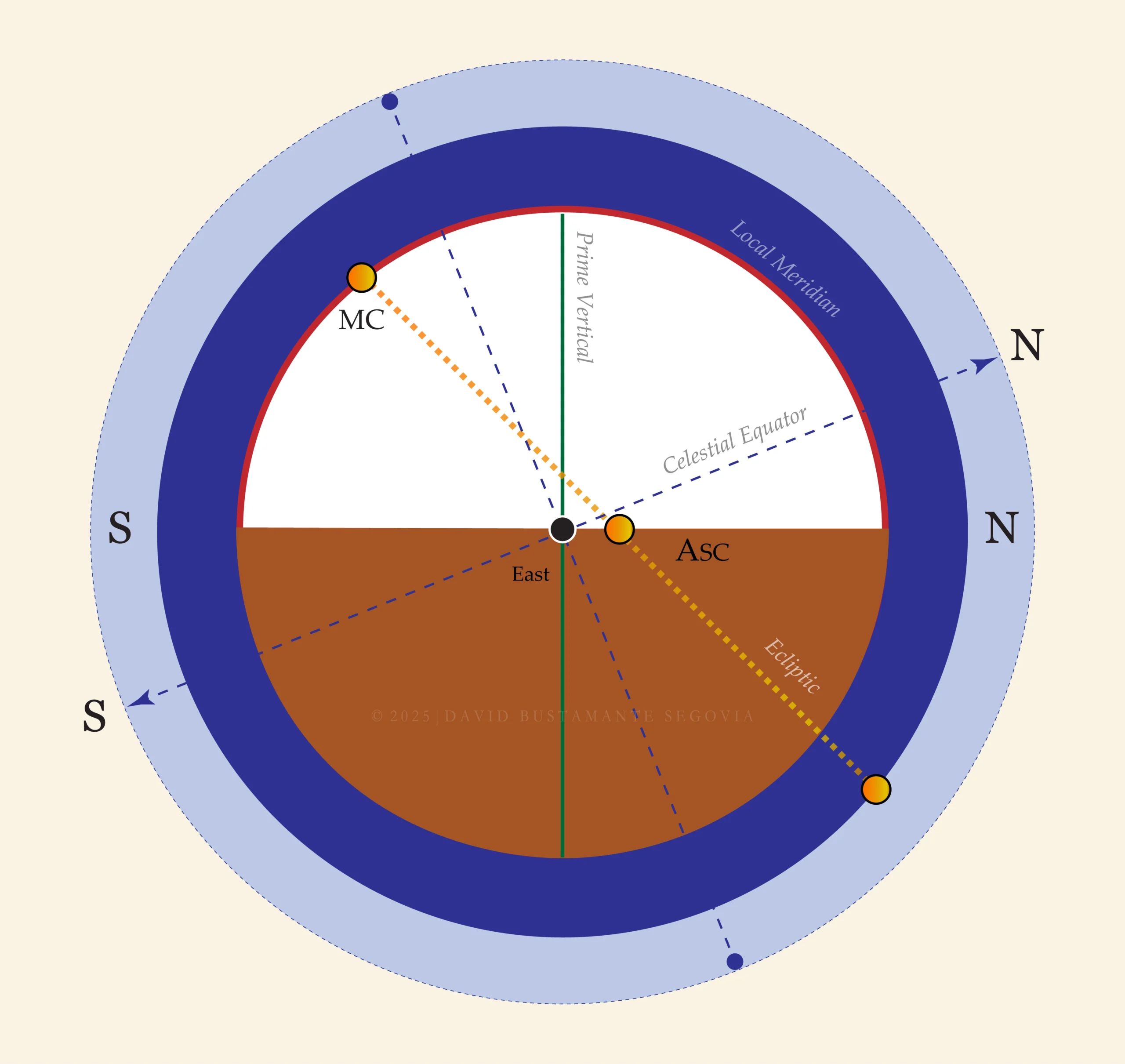
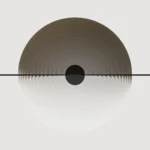
Geometric relationships at oblique latitudes. The ecliptic (yellow) is severely angled relative to the horizon plane, showing how the paradigms of the celestial equator (blue) and the prime vertical (green) become unreliable for the ascertainment of intermediate points. In the case of the celestial equator, also for the ascertainment of the ascending degree, thus becoming necessary to draw a great circle from south to north throughout the horizon plane (i.e. employment of the poles of the prime vertical), a reference frame unavailable, however, for intermediate points.
Consequently, the inherent limitations of the celestial equator in determining the ASC/DES extend to the calculation of intermediate cusps, rendering it an inadequate framework for celestial partitioning at oblique horizons.
What produces an ASC/DES or, simply, a cusp?
The mechanical principle governing the Ascendant (ASC) is identical to that which governs the intermediate cusps. Mathematically, every ASC—independent of the celestial partition method (house system) employed—corresponds precisely to the completion of that nocturnal arc (six-sixths), that is, for that specific ecliptic/zodiacal degree. Conversely, the Descendant (DES) represents the equivalent completion of that diurnal arc (that of the seventh house cusp). This same principle, proportionality, applies to the Meridian: the Medium Coeli (MC) consistently represents the midpoint (three-sixths) of that diurnal arc (that of the tenth house cusp), while the Imum Coeli (IC), in turn, the corresponding midpoint of that nocturnal arc (that of the fourth house cusp).
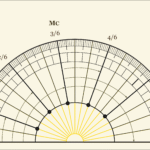
The intermediate cusps (12, 11, 9, and 8), for their part, are defined by the proportional division of their diurnal arcs, representing one, two, four, and five-sixths (1/6, 2/6, 4/6, 5/6) of the arc of the degree presiding over the house in question (Michelsen, 2009, pp. 30-31). Given that the diurnal arc of each ecliptic degree constitutes a function of its specific declination (linked to a specific date), this method anchors the house system to actual solar phenomenology. This principle forms the foundation of the Ptolemaic method: the most organic and foundational approach to celestial partitioning.
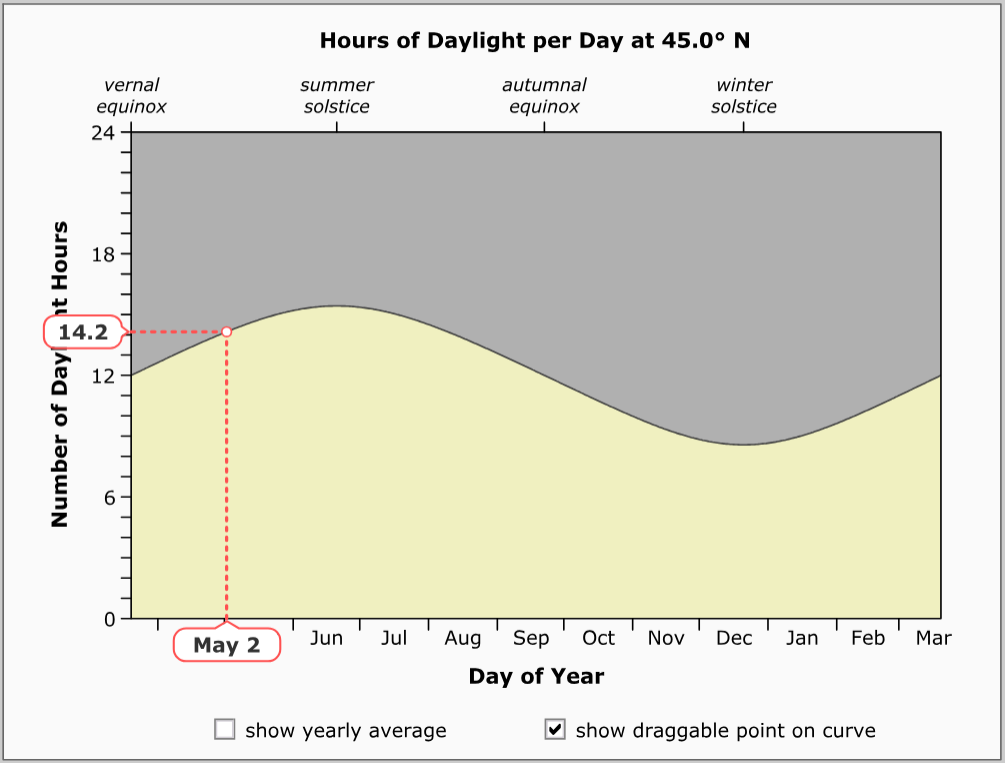
This illustration, from the University of Nebraska-Lincoln, demonstrates the non-linear truth of diurnal arcs.
Furthermore, the utilization of the prime vertical—as proposed by Campanus of Novara in the thirteenth century—proves insufficient for the accurate determination of intermediate cusps. This is due to a fundamental lack of proportionality: just as 30º of right ascension (RA) along the celestial equator does not correspond linearly to the temporal interval or amount of time required for ecliptic points to reach the corresponding cuspal thresholds, a 30º increment of altitude (alt.) along the prime vertical fails to account for the non-linear motion of the ecliptic. Should we need to judge the purchasing power between two currencies in the world (e.g., the dollar or USD and the yuan or CNY), proportionality would be the principle without which an accurate judgement would not be possible.
Linear tools
Given that the majority of ecliptic points do not coincide with the celestial equator or the prime vertical, the 30º increments within these reference frames were not intended as the final planes of measurement by Regiomontanus or Campanus. Rather, during the thirteenth and fifteenth centuries, these served merely as auxiliary great circles used to project the circles of position that intersected the ecliptic upon relatively approximate points (due to times of arrival not being exact). These methodologies provided only approximations necessitated by the lack of latitude-specific planispheric astrolabes and the absence of logarithms, the latter of which would not emerge until the seventeenth century (AFA, 2014, p. vii; Napier, 1614).
The orientation of the Earth’s axis of rotation
The consistent accuracy of the great circle intersecting the Medium Coeli (MC) across all horizons—specifically its invariable alignment with the three-sixth midpoint of the diurnal arc—is a direct consequence of the Earth’s axial orientation. Because the meridian plane is co-planar with the Earth’s axis of rotation, the MC and IC can be identified through strictly spatial or Euclidean geometry. Succinctly expounded: the MC and IC maintain a fixed alignment with the north-south azimuthal axis, a geometric stability that the Ascendant (ASC) and Descendant (DES) do not share.
The ‘hour-marker’
As demonstrated, the ASC and MC are not merely static products of spatial geometry; rather, as Deborah Houlding (1998, p. 105) observed, they function as temporal markers for the successive phases of diurnal motion. Within this framework, the spatial geometry of the horizon acts as a diagnostic instrument, capturing only a single instance of these phenomenological thresholds—or ‘wavelengths’[1]—at any given moment. This conceptualization aligns with the theories of the seventeenth-century astronomer and physicist Placidus de Titis (1603–1668), who posited that celestial partition or house division is a function of motion/time rather than a simple partition of space.[2]
What is the margin of error?
To quantify the temporal discrepancies between the natural method of celestial partition (Placidus) and the equatorial-based system (Regiomontanus), amongst others, and to further explore the former through a phenomenological lens, researchers may refer to our Periodic Light Intensity Index (PIL). This index is included in the supplementary material of our recent paper, Astronomical fidelity in historical coordinate systems of celestial partition. Quantitative comparison of linear vs. non-linear measurements.
______________________________
[1] Modern science has confirmed that the effectiveness with which flora and fauna and the human being transform or metabolise light energy is highly determined by the stage of solar influence (time of day), as it changes both the intensity and the wavelength of incoming solar radiation. Vitamin D synthesis is most effective around midday (10:00 a.m. to 3:00 p.m.), for UVB radiation, the specific wavelength needed to synthesize vitamin D, is most abundant during this period, that is, when the sun traverses the eleventh, tenth, and ninth segments of the horizon.
[2] “nothing is visible unless it has a colour,” “local motion is a kind of passion wherewith they apply, increase and diminish their light, rise, set, and recede, near and at distance,” “by their motion in the heavens, alternately change their constitutions and have a determinate degree of intension, and a definitive quantity of extension of their light,” “for it is by light only the stars influence […] on matter.” See Placidus de Titis. (1814). Primum Mobile. Trans. John Cooper. Davis and Dickson. London, UK. p. 2, 5-7.