Physical Address
The Woodlands, TX, USA
Physical Address
The Woodlands, TX, USA
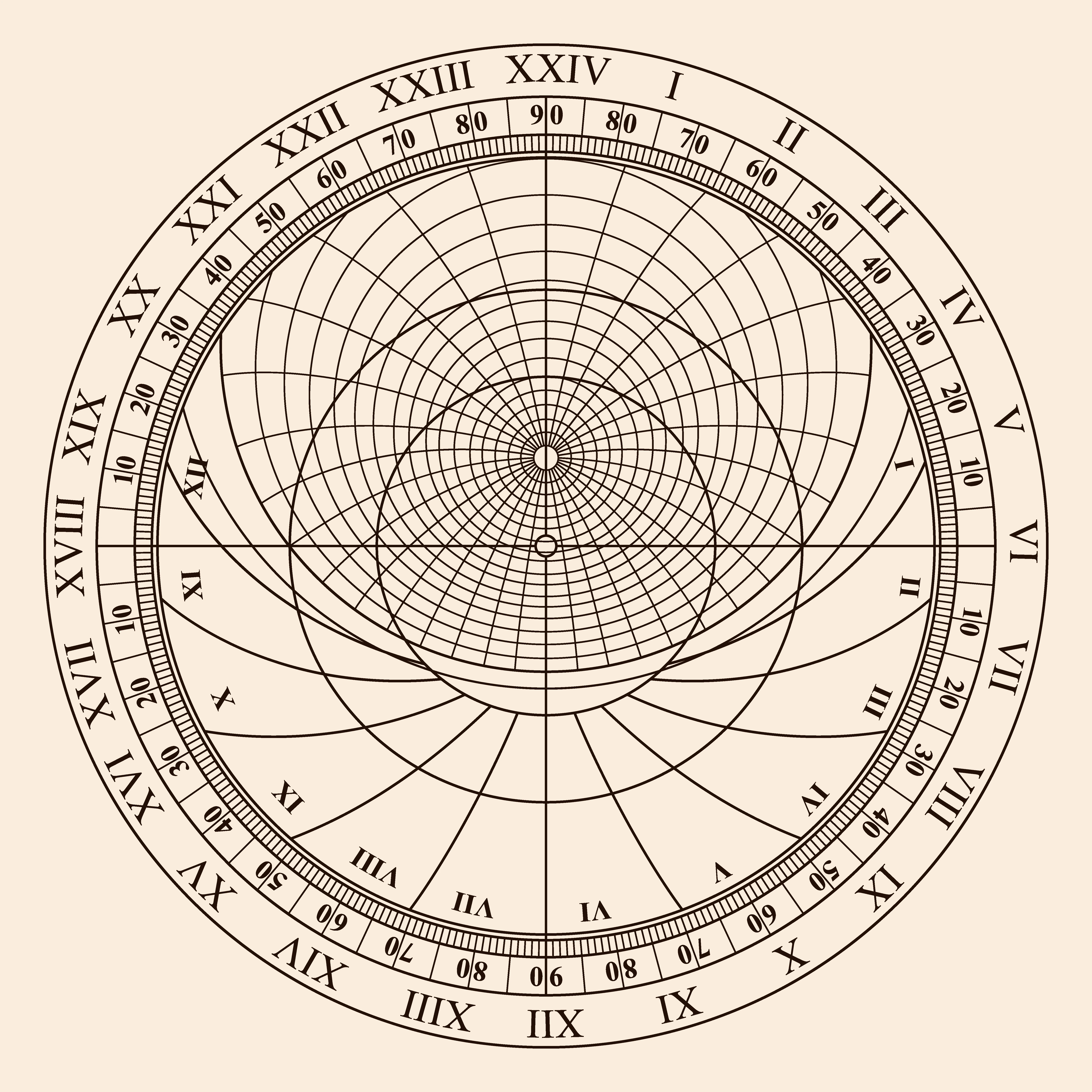
The contemporary traditionalist approach to celestial mechanics is marked by an unprecedented historical irony. The very foundation of Hellenistic astrology rests upon the hōroskopos, whose literal translation from ancient Greek is the “hour marker.” However, in dismissing the Ptolemaic methodology on the premise that it constitutes a “modern” 17th-century invention, these practitioners categorically reject the only geometric system capable of executing in physical space precisely what their revered terminology demands: the measurement of true physical hours.
Lacking the geometric literacy required to comprehend non-linear diurnal motion and differential calculus, they seek refuge in flat, time-blind demarcations, or otherwise in reductionist spatial grids. They revere the word yet discard its physics. This cognitive dissonance stems from a fundamentally retrograde epistemology: they insist upon reading geometrically flawed literature (e.g., Carter, Evans) in order to validate their misconceptions on the Ptolemaic/Placidian calculation, rather than subjecting the physical sky to observation to audit their cuspal results.
They bypass the reality that the practitioners of Antiquity did not establish their methods through the exegesis of texts; they derived them by observing the uncompromising laws of apparent diurnal motion. The authentic geometric execution of the hōroskopos remained computationally “obscure” (as William Lilly cautioned, III, p. 651) and of “no little difficulty” (as Morin de Villefranche lamented, XXII, p. 23) exclusively due to the severe trigonometric limitations inherent to their respective eras. Placidus did not conceive an unprecedented system; rather, he possessed the mathematical rigour necessary to formalise, once and for all, the natural kinematics that the ancients sought to describe.
By partitioning the diurnal and nocturnal arcs (of empty ecliptic coordinates/degrees) into exactly proportional temporal intervals, the Placidian method stands as the definitive mathematical realization of the original methodology of antiquity: the sole methodology that determines every intermediate cusp by utilising, with strict fidelity, the exact same spatiotemporal geometry required to establish the absolute Hour Marker: the Ascendant itself.

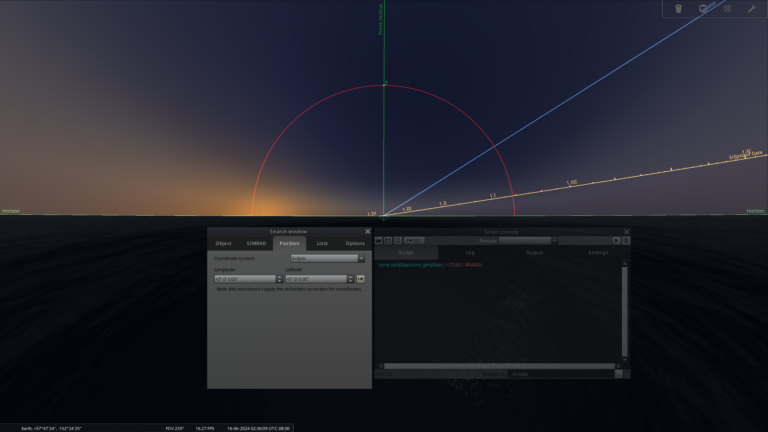
Figure 1
The Tethering of All Hour-Markers by Placidus’ Isophasal Curve (differential calculus)